

5 Mistakes That Break Down Your Rain Repellent in Winter
Daniel von Detailing1 |


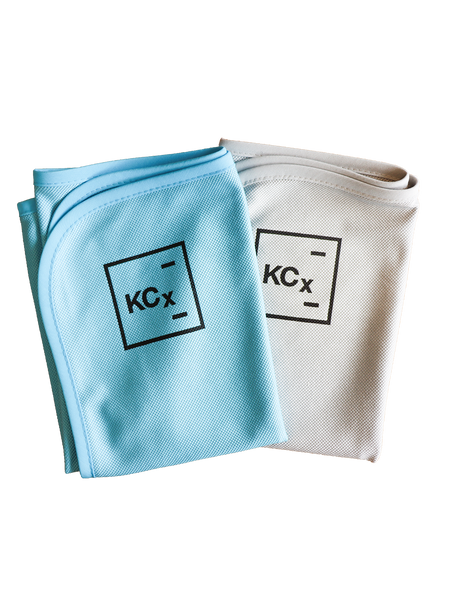
Koch-Chemie
Pro Glass Towel 230GSM Microfibre Glass Cloth




THE COLLECTION
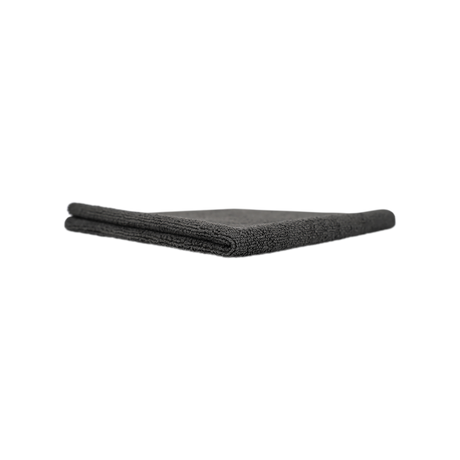
"Allround / Coating 245" short-pile edgeless microfibre cloth (245 GSM)
Short-pile edgeless microfiber cloth for precise removal


THE COLLECTION
"Allround / Coating 300" short-pile edgeless microfibre cloth (300 GSM)
Low-pile 300 GSM microfiber cloth with extra substance


Koch-Chemie
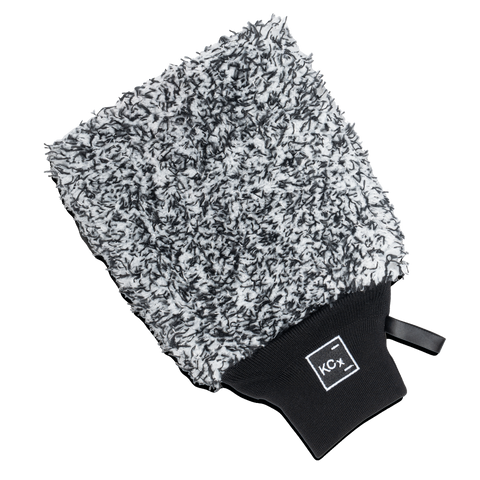
Exterior Wash Mitt 640GSM Microfibre Wash Mitt


THE COLLECTION
"Allround 365" short-pile edgeless microfibre cloth (365 GSM)
Short-pile Edgeless Microfiber Towel with more volume


THE COLLECTION
"Aqua" Twisted Loop Drying Towel (1500 GSM)
Premium Twisted Loop Drying Towel with Extreme Absorbency


Koch-Chemie
Pro Drying Towel 950GSM Microfibre Drying Towel


Koch-Chemie
Pro Allrounder Towel "315GSM" Microfibre Polishing Cloth
Premium Microfiber Polishing Cloth for Car Care


THE COLLECTION
"Dual Pile" long- and short-pile microfibre towel (420 GSM)
Double-sided microfiber towel for a precise finish


Koch-Chemie
Polish and Sealing Towel 520GSM Microfibre Cloth
What makes a good microfibre cloth for your car? GSM, pile height, edge and weave. These four values decide whether a cloth picks dirt up or pushes it across the paint. At Detailing1 you'll find all-rounders, drying towels, glass cloths and wash mitts.
Cloths & microfibre for your car are fabrics made of split polyester-polyamide fibres, each finer than a tenth of a human hair. That fineness creates a huge surface area where water and dirt get trapped instead of being pushed along in front of the cloth. A cloth is described by its weight in GSM, the height of the pile, how the edge is finished and the type of weave. Those four values define what it's for, from drying to wiping off a sealant.
Detailing1's tip from the shop: A cloth that slips out of your hand onto the floor is finished for paint. It picks up sand and grit you can neither see in the pile nor shake out, and the next wipe drags them across the clear coat. Put it to one side and grab a fresh one. To make sure you've got one to hand, plan on more than one cloth per side of the car: fold each cloth twice and you get eight clean working faces, then simply flip to a new one as soon as one is loaded. It's the cheapest scratch protection there is.
Swirls rarely come from the polisher. They come from wiping, when a particle gets caught between cloth and clear coat and dragged across the panel.
The clear coat on a modern production car is around forty microns thick, roughly half the thickness of a human hair. A grain of quartz from road dust is harder than that layer. Whatever gets pushed over it leaves a trace you'll recognise in raking light as a fine spider's web.
This is exactly where microfibre works differently from cotton. The fibres are split during manufacture, turning a round thread into a star-shaped profile with channels in between. In plain terms: the grain falls into those channels and stays put instead of riding along on the fibre surface. You can tell because a good cloth is grey inside after wiping and still looks clean on the outside.
A cheap cloth can't do that. With a high polyester share and coarse splitting, the channels stay shallow, the dirt sits on top and the cloth turns into sandpaper that feels like fabric. The difference costs a few euros per cloth and decides on hours of polishing in spring.
We often get enquiries about fine scratches that only show up after a sealant goes on. In most cases, the product wasn't to blame but the cloth used to wipe off the excess. The sealant makes the surface look smooth, and smooth paint shows every mark that was hidden in the duller surface before.
A good cloth won't fix damaged paint, though. If the clear coat already has holograms or car-wash marring, there's no way round a polish. The cloth decides whether you keep the result or lose it again a couple of washes later.
Four values fully describe a microfibre cloth, and if you can read them, you'll know before you buy which step the cloth was built for.
GSM stands for grams per square metre and describes how dense the fabric is. You can't work out what a cloth is for from weight alone. Also look at pile, weave and the manufacturer's guidance on wiping off, cleaning or drying.
The pile is the height of the fibre loops above the base fabric. Short pile glides, picks up little and works precisely. Long pile lifts particles away from the paint and holds liquid. In practice: short pile for wiping off product, long pile wherever there's still dirt on the surface.
Edge design belongs on your checklist, just like cleanliness and intended use. Sewn-in tape is stiff and sits right under your fingers. Edgeless means the edge is ultrasonically or laser-cut and so part of the fabric itself. On paint, glass and fresh sealant, that's the build we recommend.
The weave decides the character. Twisted loop twists long loops into cords and so soaks up a huge amount; classic plush is soft and meant for specific jobs; a waffle weave pulls water off glass without streaking. Then there's the polyester-to-polyamide ratio, usually eighty to twenty or seventy to thirty. More polyamide means softer, more absorbent and pricier.
You'll find the selection across all weights under Microfibre cloths. If you're unsure, check what the cloth is intended for; GSM and edge design alone don't decide whether it suits your step. The THE COLLECTION „Allround / Coating 300" short-pile edgeless microfibre cloth (300 GSM) is a short-pile cloth for the jobs listed in its product description.
A colour system isn't fussiness. It's the cheapest insurance against scratches you'd otherwise work into the car yourself without noticing at the time.
The critical area is the wheel. Brake dust is largely made up of iron filings that fly off the disc red-hot and lodge in every fibre. Even at sixty degrees in the machine, you won't get them all out. So a wheel cloth stays a wheel cloth forever.
Glass is the second special case, for a different reason. Wax, silicone oil and leftover plastic dressing travel via the cloth onto the screen and leave a film there that shows up as haze against the light and comes back with the first rain. A glass cloth must never touch care products. The Koch-Chemie Pro Glass Towel 230GSM Microfibre Glass Cloth is deliberately thin and smooth for exactly that reason.
The interior brings its own grime: grease from hands, dash dressing residue, crumbs and dust from the carpets. You don't want any of that on your clear coat afterwards, and dash dressing on the windscreen is the classic route to a haze you won't shift for two washes.
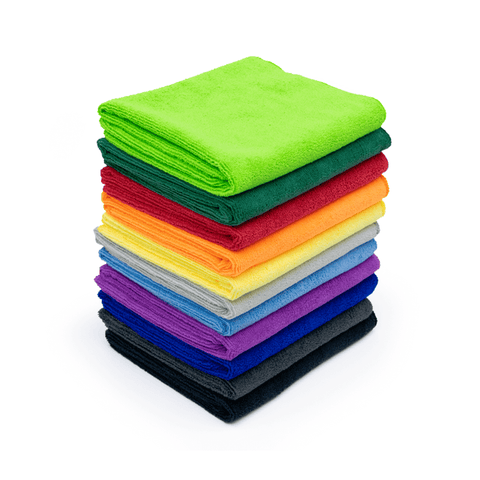
A workable system needs four colours and no debate: black or grey for wheels and arches, blue for glass, green for the interior, yellow or white for paint only. Buy each group consistently in its colour and you won't have to think for a second while you work.
From what we see day-to-day, one addition makes all the difference: keep the colours apart when washing and storing too. Four boxes or bags are enough. Throw everything into one drum together and you spread the brake dust from the wheel cloth through your whole stock, and the system's out of the window.
Every step on the car has a cloth built for it. Once you've separated them, the whole routine gets faster and the result more consistent.
It starts with the wash mitt. It has a long pile because it has to carry dirt away from the paint and up into the fibres, instead of pushing it ahead like a sponge does. The Koch-Chemie Exterior Wash Mitt 640GSM Microfibre Wash Mitt is our best-seller, and for wheels and the lower body there's the Koch-Chemie Microfibre Mitt Set „Octopus" Wash Mitt. All versions are under Wash mitts.
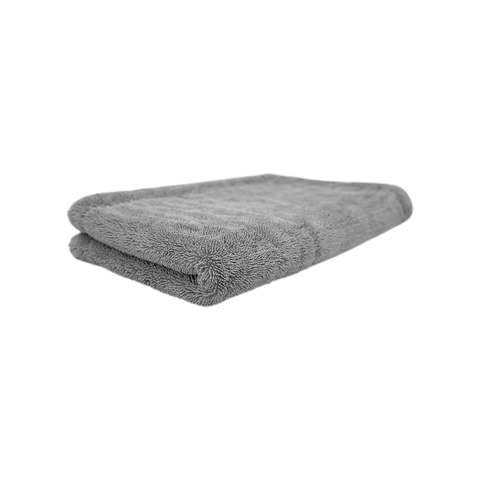
Next comes drying, the step with the highest scratch risk in the whole routine, because the paint is dry here with no lubricating film. A THE COLLECTION „Aqua" Twisted Loop Drying Towel (1500 GSM) soaks up a whole mid-size body in one go. If you'd rather work with less weight, grab the Koch-Chemie Pro Drying Towel 950GSM Microfibre Drying Towel or the Meguiars DUO TWIST Drying Towel. The overview is under Drying towels.
When wiping off polish and sealant, every fibre counts. The Koch-Chemie Polish and Sealing Towel 520GSM Microfibre Cloth picks up polish without you having to press, and the Koch-Chemie Coating Towel 300GSM Microfibre for Ceramic Coatings is designed for the short window between applying and levelling a ceramic layer. For everything in between there's the Koch-Chemie Pro Allrounder Towel „315GSM" Microfibre Polishing Cloth.
Between the big sessions, use the two-cloth method: one cloth spreads the product, the second buffs dry behind it. That keeps the film even and you don't polish residue into the panel. Suitable products are under Quick Detailer, and the soft SONAX PROFILINE MicrofaserTuch „Soft Touch" Microfibre Cloth makes a good partner for it.
The whole routine before that, from pre-wash and shampoo to managing the water in your bucket, is under Car washing. Think of cloths and washing together: the best shampoo won't save you if your mitt still has sand from the last drive in its fibres.
Look after a microfibre cloth properly and it'll last for years. The quickest way to ruin it in a single wash is a splash of fabric softener.
Fabric softener is made of cationic surfactants, i.e. grease-like molecules with a positive charge that wrap around every fibre like a coat. That coat is what makes bath towels fluffy, and on microfibre it clogs the fine channels that are supposed to pick up dirt. You'll notice straight away: the cloth stops absorbing, pushes the water around and leaves streaks.
Use a liquid detergent without bleach, optical brighteners or fragrance. Powder doesn't dissolve completely and settles between the loops. Wash temperature follows the care label of the cloth or wash mitt in question. A long wash cycle is fine; keep the spin moderate.
How you dry the cloth follows its care label; don't assume it's tumble-dryer safe. Polyester is a plastic, and too much heat fuses the fibre tips and permanently takes away the cloth's bite. Dryer sheets are out for the same reason as fabric softener. And never wash microfibre with cotton, or it'll pick up the lint and leave it on your paint.
New cloths go through the machine once before first use. Loose fibre ends and finishing residues from production stay in the fabric and end up exactly where you don't want them on the first wipe. A wash without any detergent is enough.
Eventually, though, a cloth is done, and that point comes sooner than most people think. When a cloth goes stiff, snags or just spreads water around, its time on paint is over. It's not rubbish yet: we consistently move cloths like that down to wheels, door shuts or under the bonnet. It just mustn't go back on the clear coat.
Your basic kit comes down to three questions: do you wash the car yourself, do you seal it yourself, and how often does it actually get done?
For a hand wash, check your wash media, drying towel and other cloths against the steps you're planning. Which type and how many you need depends on the surfaces, the products and how you split the jobs. With the THE COLLECTION „Allround / Coating 245" short-pile edgeless microfibre cloth (245 GSM) and the slightly thicker THE COLLECTION „Allround 365" short-pile edgeless microfibre cloth (365 GSM), you can compare two versions for the jobs listed in their product descriptions.
If you polish or seal, add two specialists. A thicker cloth for polish residue and a short-pile one for the ceramic layer, because with a coating the time between applying and levelling is tight, and a thirsty plush cloth will pull product out of the panel. Skimp here and you're working against a product that cost many times more than the cloth.
Glass needs its own cloth, twice over: one damp to loosen, one dry to buff. The interior gets a third colour. If you keep a SONAX PROFILINE MicrofaserTrockenTuch „PLUS" Microfibre Cloth in the boot, you can also give the windows and mirrors a quick wipe after rain without touching your good kit.
The most important advice from day-to-day experience comes last: quantity beats the single hero cloth. Two very expensive cloths that you flip three times to save money cause more damage than a dozen solid all-rounders you can put down without a second thought. Count on several cloths per wash, and the maths works out.
The three groups in this category are sorted under Microfibre cloths, Drying towels and Wash mitts. If you're planning the rest of the routine as well, you'll find it under Car washing and Quick Detailer. The cloth is the part of your kit that costs the least and has the biggest say in the result.
Too much choice in Cloths & microfibre? Get help picking:
Daniel von Detailing1 |

Daniel von Detailing1 |

Daniel von Detailing1 |

Daniel von Detailing1 |

Daniel von Detailing1 |

Daniel von Detailing1 |

Jasper von Detailing1 |

Daniel von Detailing1 |

Daniel von Detailing1 |

Daniel von Detailing1 |

Jasper von Detailing1 |

Jasper von Detailing1 |