Today: Clear coat holds just eight microns of reserve. Shop polish

From the blog: How often you can polish without losing clear coat. Read the guide

Weather: Three dry days in a row from Sunday. Paint protection

Right now: Tree sap hardens into the paint in two days. Pre-cleaners

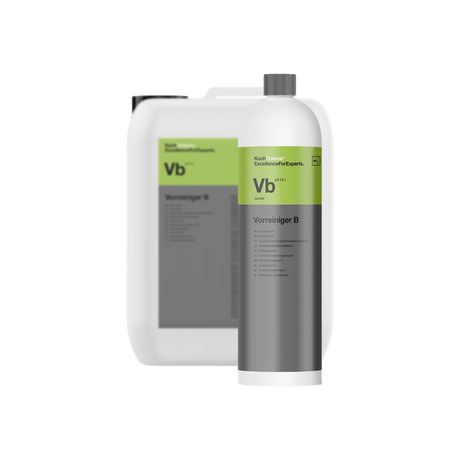
Best seller: Koch-Chemie Vorreiniger B "Vb" lifts sap and bugs. View product

New: NIGRIN "Alu Monster" turns red on brake dust. View product

Clearance: INNOVACAR is running out while stock lasts. Shop the brand

Instagram: Today the result of hand versus machine. Follow us

Advice: How often is too often to polish? Ask us. Start a chat

Support: Shipping and returns in the help centre. Go to help centre

Buyer protection: Real reviews on Trusted Shops. Read reviews

For businesses: Detailing1 PRO bills net of VAT. Learn more

Car lifts

(12 products)
At Detailing1, the car lift category groups the lifting gear for vehicle detailing and wheel service: two-post lifts with the wheels hanging free, four-post lifts with runways, and scissor lifts that drop flush into the floor. Four planning figures decide the choice: type, load capacity in tonnes, usable ceiling height and how much the concrete floor can take. On top of that, commercial use brings a yearly inspection requirement.

View as

  • Planning a car lift for detailing and wheel service the right way

    What does a car lift actually have to do for detailing work? It has to hold the vehicle safely, open up the underbody and fit the space you've got. Four things decide it: the type, the load capacity, the ceiling height and the floor. This page sorts out the planning figures before you go picking a model.


    Car lifts are lifting units that raise a whole vehicle and hold it at working height until the job underneath is done. They take the weight either on the frame through four arms, under the wheels on runways, or flat across a platform. Four figures decide the choice: the type, the load capacity in tonnes, the ceiling height you have, and how much your floor can take. Without those four numbers, comparing models is premature.

    • The type follows the work, not the price. Two posts free the wheels, four posts carry the car on its own wheels, a scissor lifts it flat and then disappears into the floor. If you spend your time in the wheel arches and along the sills, you'll choose differently than someone who mostly swaps wheels.
    • Work out the load capacity with headroom, not on the edge. An electric compact SUV weighs between 2.0 and 2.5 tonnes empty these days, and a loaded van sits above that. About 20 percent on top of the heaviest vehicle that will ever go up is the number you buy on.
    • The floor is the hardest limit in this category. For two-post lifts, makers usually call for concrete from grade C20/25 up and 200 mm thick; scissor types often need a bit less. Screed over an insulation layer doesn't cut it, however hard it feels underfoot.

    Day-to-day from Detailing1: We often get inquiries where the ceiling height is already measured and the lift still won't fit. It's nearly always the same detail: the tape went up to the ceiling, but what's in the way is whatever hangs below it. The track of a sectional door runs right across the room, and lights, heating pipes and cable trays eat up more centimetres. So don't measure the ceiling — measure the lowest thing above where the lift will stand, then take off the height of your tallest vehicle. What's left is the travel you can actually use. A photo of the spot with a folding rule against the wall answers more questions than any spec sheet.


    Three types for three ways of working

    Two-post, four-post and scissor lifts differ in where they grab the vehicle and what stays open to you while they do.

    The two-post type puts four arms under the pick-up points on the vehicle frame. The wheels hang free in the air; wheel arches, brakes, sills and the whole underbody sit open. For work at the wheel and for cleaning out the arches, that's the most direct access there is.

    The four-post type works the other way round. The vehicle drives onto two runways and stays on its own wheels the whole time. There's no lining up on set pick-up points, driving on takes under a minute, and the wheels stay loaded. If you do need them free, you add a jacking beam that lifts the axles off the runway.

    Scissor lifts raise a platform on crossed levers. They need no posts beside the vehicle, drop flush into the floor, and hand the space back the moment they're down. You get them as a low-rise version with about a metre of travel for work at the wheel, and as a full-rise version that goes up to standing height.

    Within the scissor type there are two ways to set it up. The recessed version sits flush in the floor and needs a pocket cut into the concrete — a decision you can't take back. The surface-mounted version stands on the floor and can be moved within limits, but the ramp and base frame make an edge that every wheel has to roll over.

    For detailing, side access is what matters most. On a scissor you can walk right round the car; on two posts you get the wheels at hand height instead. Both types work — they just spread the convenience differently.

    For a plain wheel change you need none of these three. A trolley jack with a matching pair of axle stands handles it as a one-off and then goes back in the corner; the models for that sit under trolley jacks.

    Load capacity with headroom, not at the limit

    Load capacity isn't set by the car that happens to be in the driveway right now, but by the heaviest one that will ever go up on it.

    The sum starts with the kerb weight from the papers and ends at the gross weight limit. A mid-size estate sits around 1.6 tonnes empty and may weigh over 2.2 tonnes loaded. What goes up is the state the vehicle arrives in, and that's rarely the empty one.

    EVs have moved the numbers. Depending on capacity, the battery adds 300 to 600 kilos, spread across the floor of the car. An electric compact SUV that would've counted as a second car ten years ago now sits around 2.2 tonnes empty. What that means for you: lifts rated at 2.5 tonnes are cut too fine for a mixed run of vehicles.

    Then there's weight distribution. No vehicle puts its weight evenly on four points; front-wheel-drive cars carry a lot more up front. That's why makers give a permitted ratio, often 2:3 or 3:2 between the axles. Set a car on the wrong way round and you overload two arms while the other two sit there with room to spare.

    The rated capacity also only holds in the intended arm position. Arms extended a long way act as a longer lever and load the carriage and spindle harder than short ones. Running near the rated figure day in, day out doesn't show up as a break but creeps in: the lift gets slower, the slide blocks wear, and the hydraulics visibly settle overnight.

    The pick-up points themselves are the second half of the same question. They're in the vehicle handbook, not down to feel. On models with sill trim or a load-bearing battery case you need adapters with the right pad, or the rubber block presses in exactly where the repair costs the most.

    Ceiling height and travel narrow the field

    The height you can use comes from three figures: the lowest thing above the standing area, the height of the vehicle, and the build height of the lift itself.

    An estate is about 1.50 m, an SUV 1.70, a high-roof van over 1.90 m. To stand upright underneath, you need roughly 1.90 m of clearance below the vehicle. Add the two together and you've got the requirement, and for an SUV that's already around 3.60 m.

    With two-post lifts, the design adds to that up top. The common version joins the two posts with a top beam that carries the chains and lines. It keeps the floor clear and costs you height. The alternative runs the link along the bottom through a base frame: the space overhead stays open, but there's a threshold between the posts that every wheel has to roll over.

    Four-post lifts build up about as high, because they run their drive gear up top or off to the side too. Scissor lifts have the clear edge here: there's nothing above them eating into your height, and low-rise models get by on far less ceiling than any post lift.

    Beyond height, floor area counts. Leave about a metre all round the vehicle, or you can't open a door or get a bucket to the side. Two-post lifts also need a run-up, because the vehicle goes in centred between the posts.

    So before you compare a single price, planning a lift for your own workshop means measuring three things: the clear height under the lowest obstacle, the width between the walls, and the length left over once the vehicle is in.

    The floor decides before the lift does

    A lift feeds several tonnes into the floor through a handful of anchor points. What that floor can take decides the type, often before any model is even on the table.

    The usual spec is concrete of grade C20/25 and a thickness from 200 mm up for post lifts; scissor lifts get by on less, depending on the model. C20/25 means the concrete takes 20 newtons per square millimetre in compression, measured on a core. In plain terms, it just means expansion anchors bite into the material instead of breaking it out.

    Screed is not a foundation. A floating screed over an insulation layer looks like a concrete slab but works as its own layer under load. Underfloor heating rules out drilling anyway. If you don't know the build-up, a core drilling settles it, and it costs a fraction of what a torn-out anchor does.

    With the fixings, the details count: enough distance from the slab edge, no anchor in an expansion joint, the tightening torque the maker specifies, and a re-torque after the first few weeks of use. Chemical anchors hold up better than plain expansion anchors in concrete that's prone to cracking.

    The base also has to be level. Posts are set plumb and shimmed if needed, or the carriages run stiff and the slide blocks wear on one side. A fall towards a drain is fine, as long as the maker allows it.

    Water belongs in the plan. Work under the vehicle with pressure and you throw spray as far as the drive unit, so you need a drain that can take the volume. Which class of machine fits that sits under pressure washers. Power is the last item on the list: many post lifts run on 400-volt three-phase, while smaller scissor lifts sometimes run on 230 volts.

    Mandatory inspection and servicing come with the purchase

    A car lift is a piece of work equipment that has to be inspected. If you lift commercially, you plan the inspections in from the start, because they come round every year.

    For commercial use in Germany, the Betriebssicherheitsverordnung applies. It calls for an inspection before the lift first goes into service, and recurring inspections after that, in practice at least once a year, carried out by a qualified person. The results are documented, usually in an inspection logbook that stays with the lift.

    In a private setting the ordinance doesn't apply. The maker's specs are still binding, though, and your own insurer will ask for exactly those records if something goes wrong. The effort is manageable; a missing record isn't.

    The purchase should include CE marking, a declaration of conformity and an operating manual in German. If one of them is missing, so is the basis for the later inspection. Everyone who operates the lift gets a briefing before first use, and that holds even if it's just the two of you.

    On top of that comes the daily visual check before lifting: are the arm locks seated, do the safety catches click in audibly, are the chains and cables free of breaks, is hydraulic oil leaking anywhere. That half a minute is the difference between a faulty part and an accident.

    One buying criterion that's on no line of any spec sheet is parts supply. A lift you can get seal kits, slide blocks and control parts for runs fifteen years. One with no service partner within reach stands idle at the first leak and is hard to get inspected.

    When the purchase really pays off

    In detailing, the gain from a lift is less about speed than about your back: what takes an hour kneeling on the floor, you do standing in forty minutes, and you're still upright at the end.

    Flushing out wheel arches, degreasing sills, sealing the underbody, coating the arches, checking the state before handover. This work is a slog on a car sitting on the ground, so it often gets cut short. Up in the air it turns routine, because the light reaches in and both hands are free.

    The first few vehicles take longer than before. Finding the pick-up points, lining up the arms, stopping halfway up to check everything's seated: by the fifth time that costs you no thought at all, though at the start it's five minutes every time. That's part of it, and no sign the purchase was a mistake.

    If, on the other hand, you change wheels twice a year and otherwise work on the car with its feet on the ground, you don't need a fixed lift. A trolley jack and axle stands cover that completely, and the rule for it is short: you lift to raise it, you work on steel.

    As soon as wheels come off the car more often, it's worth a look at the second half of that job. Mounting and balancing gear sits under tyre changers, and on floor space it wants planning together with the lift, not one after the other.

    In the order you build things up, lifting gear rarely comes first. First come floor, light, power and water, then the pre-wash, then the kit that moves vehicles and wheels. The overview of all the blocks sits under workshop equipment.

    And when the decision's on the table: send us the three numbers from this page, clear height, floor build-up and heaviest vehicle, plus a photo of the spot. We'll tell you which type fits your space, and we'll say just as plainly when a trolley jack is the more honest answer for your case.

    Too much choice in Car lifts? Get help picking: