How often can you polish a car? Your clear coat has eight microns
Daniel von Detailing1 |
Koch-Chemie × COLOURLOCK
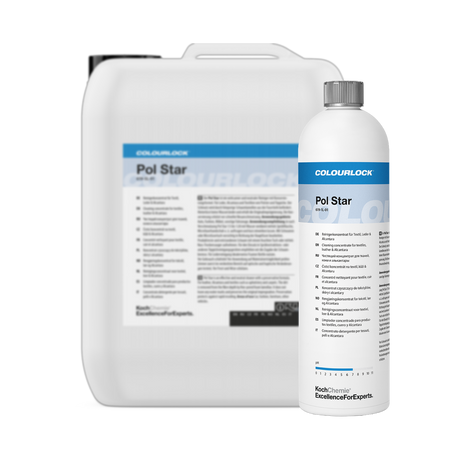
COLOURLOCK "Pol Star" cleaner concentrate for fabric, leather & Alcantara
pH-neutrales Reinigerkonzentrat für Textil, Alcantara und Glattleder
Koch-Chemie × COLOURLOCK
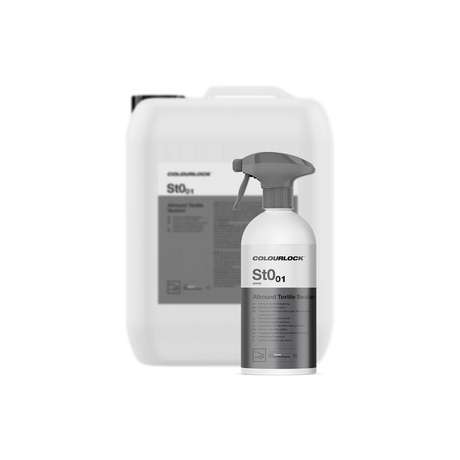
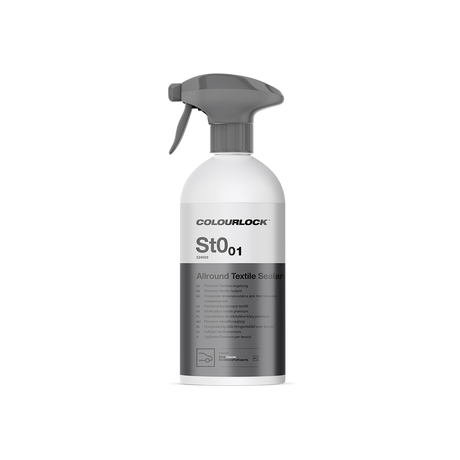
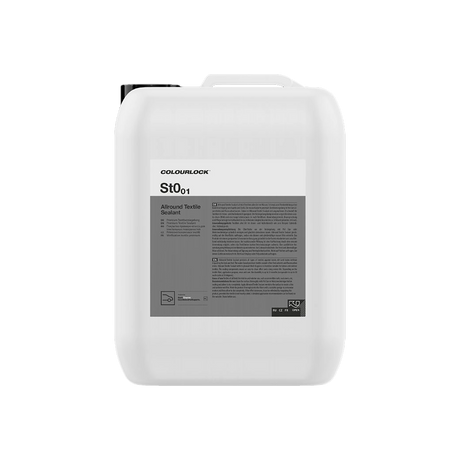
Allround Textile Sealant "St0.01" Premium Fabric Sealant
Optimal Textile Sealant for Long-Lasting Protection
Koch-Chemie × THE FINISHER
THE FINISHER "LeatherTexClean" Leather & Textile Cleaner
Mild cleaner for smooth leather and textile surfaces
SONAX
XTREME Upholstery+Alcantara Cleaner Textile Cleaner
Upholstery+Alcantara Cleaner — Foam cleaner with odor neutralization
SONAX
PROFILINE FabricCoating fabric impregnation
FabricCoating — Textile impregnation for convertibles & interiors

Fabric cleaners do the work, brush and towel finish it.
GYEON
Q²M FabricCleaner Textile Cleaner
Textile Cleaner – deep acting for seats, carpets, headliners
Koch-Chemie × THE FINISHER
THE FINISHER "VinylTexClean" Vinyl/Textile Cleaner
Mild cleaner for vinyl and textile surfaces
SONAX
XTREME Upholstery+Alcantara Cleaner (Propellant-Free) Upholstery Cleaner
Upholstery + Alcantara Cleaner — propellant-free, neutralizes odors
Koch-Chemie × THE FINISHER
THE FINISHER "VinylGuard" Vinyl Care
Vinyl upholstery care with UV protection for a pleasant feel
Koch-Chemie × THE FINISHER
THE FINISHER "TexLock" fabric sealant
Universal textile sealant with Easy-to-Clean effect

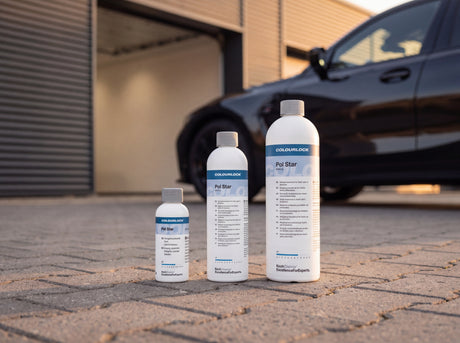
Pol Star lifts hand oils and jeans dye off pigmented seats
INNOVACAR
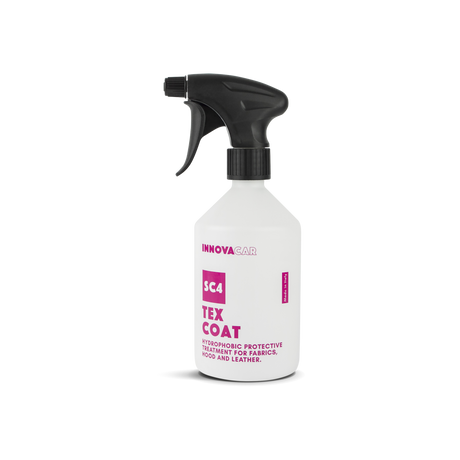
"SC4" Tex Coat Textile Sealant
Textile and leather waterproofing with long-lasting effect
Meguiars
FOAMING FLOORMAT and Carpet Cleaner for Car Mats & Carpets
Textile cleaners for a perfect finish
How do you clean car upholstery properly? With foam instead of liquid, and with an extraction that pulls the loosened dirt back out. Whatever soaks into the foam padding travels back up as it dries and ends up as a ring. A textile sealant afterwards keeps liquid sitting on top of the fibre. At Detailing1 you have the cleaners and sealants for exactly that ready to go.
Textile and upholstery care in the car works on seat covers, carpet, floor mats and the headliner. The tricky part isn't loosening the dirt, it's getting it out: textiles soak up liquid and give it back slowly. Work too wet and you push the loosened dirt down into the foam padding, where it comes back up as a ring while it dries. That's why this category runs on foam.
Detailing1's tip from the shop: We often see seats with a pale ring after cleaning that wasn't there before. That's not product residue, it's the original dirt, carried down with the moisture and pulled back up to the edge as everything dries. The fix is less water and more pickup: work with a dry foam, press a clean terry cloth firmly onto the surface and repeat until the cloth stops taking anything up. If you've got a wet vac, it matters more here than any product. And always work the whole seat panel up to the next seam, never just the stain.
Car textiles are nearly always a polyester weave over a foam backing. That build explains both quirks of the category.
The fibre itself is smooth and barely takes on dirt. What gets dirty is the gap between the fibres, where dust, crumbs and dried-in liquid collect. That's why vacuuming before any wet work isn't a warm-up, it's the step that does most of the job.
The foam underneath is the real problem. It soaks up like a sponge and only gives back slowly. Any liquid that reaches it sits there for days and drags the loosened dirt back up with it as it evaporates. That's exactly what creates the rings that look worse after a clean than before.
So textile cleaners run on foam. The foam carries the surfactants but holds only a fraction of the water a liquid does. For you that means the cleaning action stays up in the fibre, where the dirt is, and the foam padding stays dry.
A third point is the sheer amount of water across the area. A seat looks smaller than it is: cushion, backrest, bolsters and sides easily add up to a metre and a half of surface. Soak all of that evenly and you've put several hundred millilitres of water into a closed car, and every bit has to come back out. That's where cleans go wrong that were otherwise done right.
The second reason for foam is control. You can see where product already is, so you don't overdose. With a liquid you only notice once the seat is soaked through.
The routine has four steps, and the fourth is the one almost everyone skips.
Vacuuming comes first, and thoroughly. A crevice tool into the seams, a brush tool over the surface. Crumbs that get wet can't be vacuumed any more, they turn to mud in the seam. On cars with child seats it's worth pulling the seat out first, or at least sliding it right forward.
Then you foam. Concentrates you mix to match how dirty it is; ready-to-use foams you spray straight on. Work in half-seat sections so nothing dries on, and go sparingly, the surface should look damp, not wet.
With a soft brush you work the foam into the fibre, small circles, no pressure. On stubborn spots dwell time beats force. Brush too hard and you stand the fibres up, and the spot ends up looking lighter than everything around it.
The fourth step is the pickup, and it decides the result. Press a clean terry cloth down firmly until it loads up, move to a dry patch and repeat. A wet vac does it faster and deeper. Whatever you don't pull out here, you'll see again in two weeks.
The right moment is a warm, dry day when you can leave the car open for a few hours. In November fog the drying takes many times as long, and that's exactly when the musty smell sets in. If there's no way around it, a fan moving air through the cabin helps more than any heater, warmth with no air exchange just drives the moisture onto the glass.
To dry, open the doors and get air moving. A seat left damp in a closed car smells musty after two days, and that smell then sits in the foam padding, where no surface cleaner can reach it.
Stains sort by their chemistry, and that decides the product.
Water-soluble stains like coffee, juice and fizzy drinks are the easy case, as long as they're fresh. They come out with the standard cleaner. Time is what counts: in the first few minutes a dab with a damp cloth does it; after a week you're deep-cleaning the whole seat.
Greasy stains from chips, sun cream or hand cream want more surfactant and dwell time. Here it pays to mix the concentrate stronger and give the foam five minutes before you brush.
Protein stains, milk, blood and vomit, must not be treated with heat. Protein sets and then bonds to the fibre for good. Work cold, never with hot water, and air the area out well afterwards, or the smell stays.
Chewing gum and wax are special cases where cold beats chemistry. A cool pack from the freezer laid on the spot makes the mass brittle, and then you can snap it off with a blunt edge instead of smearing it into the fibre. Only what's left after that is a job for the cleaner.
The hardest case is pet urine, because the problem doesn't sit in the fibre but in the foam beneath it. Surface cleaning lifts the stain and leaves the smell, which comes back with moisture. Here there's rarely a way around soaking it through and wet-extracting afterwards.
For floor mats and carpet the Meguiars FOAMING FLOORMAT and Carpet Cleaner is built for the tougher surfaces, where you can put more mechanical work in.
A good third of the range is sealants and protectants. They work unlike any cleaner and pay off above all as prevention.
A textile protectant lowers the surface energy of the fibre. Water and watery liquids can no longer wet it and stand up as beads instead of soaking in. In practice: spilled coffee sits visibly on top and dabs off, instead of running into the foam within seconds.
The Koch-Chemie Allround Textile Sealant "St0.01" premium textile sealant and the SONAX PROFILINE FabricCoating fabric protectant cover this group, alongside the INNOVACAR "SC4" Tex Coat textile sealant and the THE FINISHER "TexLock" textile sealant.
The honest read: a protectant isn't permanent. Friction wears it off and it needs redoing after one or two years, sooner on the cushion than on the backrest. And it guards against liquid, not dry dirt: dust still settles, and the seats need vacuuming just as often as before.
On application, even coverage is everything. You lay the protectant down in several thin, crosshatched passes, not one wet flood, otherwise you get zones with different performance that you only spot at the first spill. Let it flash off briefly between passes. And ventilate well, since most products in this group are solvent-based.
The right moment is straight after a deep clean, on the dry fibre. Applied over dirty fabric, the protectant seals the dirt in and lasts a lot shorter.
For convertible tops and outdoor textiles the THE FINISHER "CoverGuard" textile sealant is a version built to handle UV load on top of that.
The range in this category is compact and sorted into three groups.
The concentrates sit at the top, and for good reason. The COLOURLOCK "Pol Star" cleaning concentrate for textile, leather and Alcantara leads our sales list by a clear margin. It covers three materials with one product and mixes stronger or weaker to match the dirt: on an interior that mixes cloth seats, Alcantara bolsters and leather details, that saves you two bottles.
The ready-to-use foam cleaners make up the second group. SONAX has the widest choice here, including the SONAX XTREME Polster+AlcantaraReiniger upholstery cleaner in the aerosol version and the propellant-free one for anyone who'd rather skip pressurised gas. For mixed leather-and-cloth seats there's the THE FINISHER "LeatherTexClean" leather and textile cleaner, which handles both covers in one pass.
The third group is the ten sealants and protectants, from the standard option to specialists like the GYEON Q² Fabric Coat textile sealant and the Soft99 Cloth Barrier Fabric Coat textile protectant.
Consumption is harder to work out here than with leather, because it leans heavily on how dirty things are. For a deep clean of the seats and carpet in a compact car, reckon on 200 to 400 ml of working solution; on a badly soiled used car, several times that and multiple passes.
Not every soft material in the cabin is a cloth seat, and the differences matter in practice.
The classic cloth seat is the most straightforward case. Foam cleaner, soft brush, lift out, dry. The SONAX XTREME Polster+AlcantaraReiniger (propellant-free) upholstery cleaner is our best-stocked item here.
Alcantara and microfibre covers are napped and want restraint. Rubbed in wet, the fibres lie flat and go greasy-shiny. Work with minimal moisture, dab rather than rub, and gently brush the nap back up afterwards. The effect shows up mostly on the steering wheel and seat bolsters, where friction is already high.
Vinyl isn't a textile but turns up in this category, because it's often fitted right next to cloth on seat bolsters and in boats. It doesn't need a textile cleaner but a combination of cleaning and UV protection, for instance with the THE FINISHER "VinylTexClean" vinyl/textile cleaner and the THE FINISHER "VinylGuard" vinyl dressing.
The headliner is the touchiest area in the whole car. It's glued on, and too much moisture releases it from the backing, damage you can only fix by re-covering. There you work almost dry, little foam and no pressure. In doubt, a slightly marked headliner is the lesser evil next to one that sags in waves.
If your interior is mostly leather, the road leads to Leather with its own chemistry. For dashboards and hard surfaces, Interior care is the place, and Interior gives you the overview across all three material worlds.
Too much choice in Textile & Upholstery? Get help picking: